This guide covers the materials, design principles, and supplier criteria that define a genuinely sustainable retail display program — and explains why the switch makes financial sense, not just environmental sense.
Key Takeaways
- Permanent metal displays generate far less waste than cardboard or MDF alternatives that need constant replacement
- Metal — particularly aluminum with high recycled content — can be recycled indefinitely, making it one of the most sustainable display materials available
- Modular design and swappable graphics extend display life and reduce overall carbon footprint
- LEED-certified display systems provide verified environmental performance backed by independent standards
- Sustainable displays deliver measurable ROI through lower total cost of ownership and stronger appeal to Gen Z and Millennial shoppers
Why Eco-Friendly Retail Displays Matter More Than Ever
Consumer expectations have shifted — and the data backs it up. Deloitte's 2024 Gen Z and Millennial Survey, which surveyed over 22,000 respondents across 44 countries, found that 64% of Gen Zs and 63% of Millennials are willing to pay more for environmentally sustainable products or services. That's not a niche demographic — it's the core of retail's growth audience.
The shift, however, goes beyond product packaging. Sustainability scrutiny now extends to the store environment itself: the fixtures, the wall systems, the display infrastructure. According to Gensler's 2023 retail sustainability guidance, sustainable retail design explicitly includes flexible fixture layouts, modular grids, and designing for disassembly — not just energy-efficient lighting or recycled shopping bags.
For retailers operating under corporate ESG commitments, this creates a real compliance gap. Display infrastructure needs to align with those goals — not undermine them. LEED-certified materials address this directly. Aluminum slatwall systems manufactured with verified recycled content, for example, can:
- Support store-level LEED certification documentation
- Satisfy ESG audit requirements at the fixture level
- Demonstrate measurable environmental impact to retail partners and brand stakeholders
That's a concrete, verifiable sustainability contribution — not just a packaging swap.
Permanent vs. Temporary Displays: The Sustainability Trade-Off Retailers Get Wrong
The Cardboard Misconception
The most common error in retail sustainability planning is treating corrugated cardboard temporary displays as the "green" default. Cardboard is recyclable, yes — but recyclability alone doesn't tell the full story.
Temporary displays, by definition, are designed for five months or less (per Shop! Association's industry definitions). That means a single product campaign can require manufacturing, shipping, installing, and disposing of an entirely new display structure.
Multiply that by a dozen campaigns per year across hundreds of store locations, and the cumulative material consumption adds up fast, regardless of how recyclable the individual unit is.
Why MDF Isn't the Answer Either
Conventional permanent fixtures typically use MDF (medium-density fiberboard), which carries its own set of problems:
- Formaldehyde binders — the EPA's TSCA Title VI limits MDF to 0.11 ppm formaldehyde emissions, acknowledging the inherent chemical risk in the material
- Limited recyclability — a 2023 peer-reviewed review confirms that cured urea-formaldehyde resin binders make MDF fiber recovery difficult, meaning most MDF fixtures end up in landfill at end of life
- Susceptibility to degradation — MDF warps, delaminates, and degrades under moisture and load, shortening its practical lifespan
The Real Sustainability Advantage of Permanent Metal Displays
A permanent metal display built from steel or aluminum is engineered to last across many campaign cycles. When a brand refreshes its merchandising — seasonal changes, new product launches, promotional resets — only the graphics, signage, or shelving accessories need updating. The structural fixture stays put.
Eco-friendly retail display strategy isn't about picking the cheapest recyclable material for each campaign. The goal is a display program that minimizes total material consumption over time — and permanent metal fixtures are how you get there:
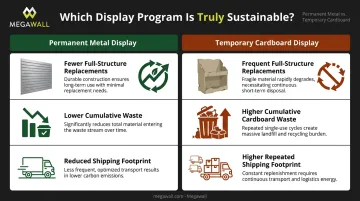
- Fewer full-structure replacements — update graphics and accessories, not the fixture itself
- Lower cumulative waste — one durable structure replaces dozens of single-use cardboard builds
- Reduced shipping footprint — less frequent manufacturing and transport per campaign cycle
The Best Eco-Friendly Materials for Retail Displays
Recycled-Content Metal: Steel and Aluminum
Metal stands out as the most inherently sustainable display material for one reason: it can be recycled indefinitely without loss of quality.
The World Steel Association reports that approximately 680 million tonnes of steel were recycled in 2021 alone, avoiding more than 1 billion tonnes of CO2. The U.S. steel recycling rate sits at 69%.
Aluminum's story is equally strong. Recycling saves 95% of the energy required to produce new aluminum from raw ore — confirmed by the Aluminum Association — with a global recycling efficiency rate of 76% according to the International Aluminium Institute.
Aluminum slatwall is particularly well-suited for sustainable retail display programs:
- Lightweight yet exceptionally strong
- Corrosion-resistant with powder-coated or anodized finishes
- Holds over 50 lbs per linear foot — matching steel's load capacity
- Can be manufactured with a high proportion of recycled content
Megawall's aluminum slatwall systems are manufactured from over 50% recycled content and carry LEED certification, giving retailers a verifiable credential to back sustainability commitments. The systems are also formaldehyde-free and easy to clean, eliminating the indoor air quality concerns associated with MDF.
Steel slatwall rounds out the metal options with its own durability case. Megawall's steel systems show no risk of warping, cracking, or delamination under consistent retail loads. At end of life, the material's recyclability far outperforms MDF's typical landfill trajectory.
Supplemental Eco-Friendly Material Options
Beyond metal, retailers may encounter several other sustainable material choices:
| Material | Sustainability Advantage | Practical Limitation |
|---|---|---|
| Bamboo | Rapidly renewable, strong | Less consistently sourced at commercial scale |
| Fabric graphics | Reusable, recyclable, lower-toxicity inks | Requires compatible display infrastructure |
| Soy-based inks | Renewable feedstock, comparable print quality | Limited to printed elements only |
| PLA bioplastics | Biodegradable under specific conditions | Higher cost, requires industrial composting |
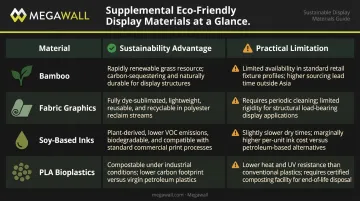
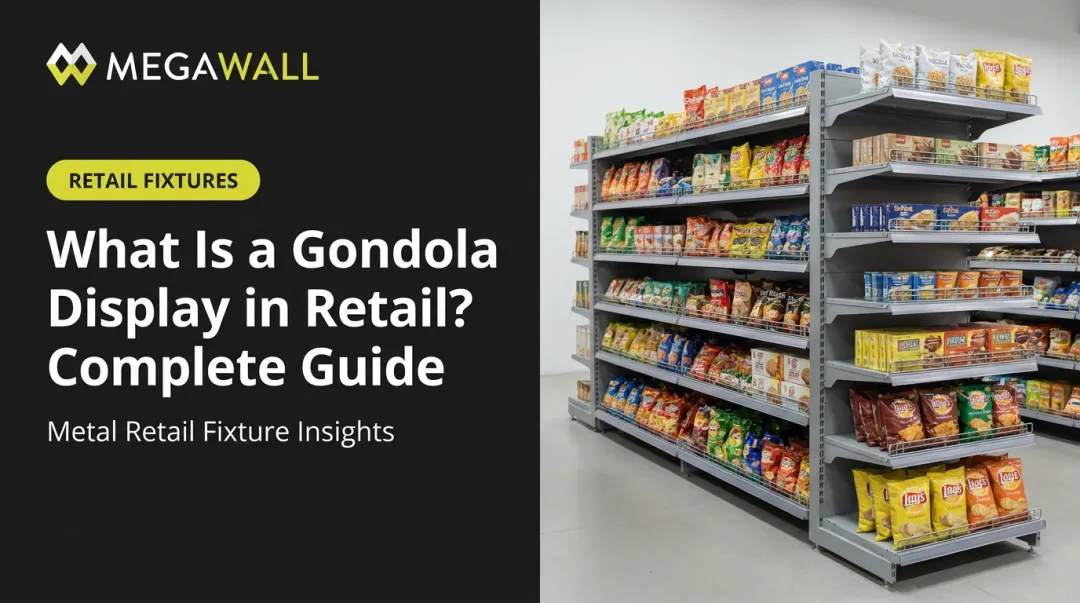
Not all "eco-friendly" labels hold up to scrutiny. Before committing, evaluate each material against your display's expected lifespan, maintenance requirements, and actual end-of-life pathway — a product that requires industrial composting or specialized recycling may not deliver on its green promise in practice.
Sustainable Design Principles That Reduce Waste and Shipping Impact
Modular Design: The Highest-Impact Choice
Modular display design is the single most effective structural decision for sustainability. When display systems use interchangeable components, brands can refresh graphics, swap shelving, or reconfigure accessories without discarding the base fixture. Each campaign refresh consumes only the components that actually need to change.
POPAI's 2024 Sustainability Guide identifies slot-together structures, mechanical fixing (bolting rather than gluing), and end-of-life strip-down as the core sustainable design practices for the display industry. Slatwall systems put these principles into direct practice.
Slatwall as Modular Infrastructure
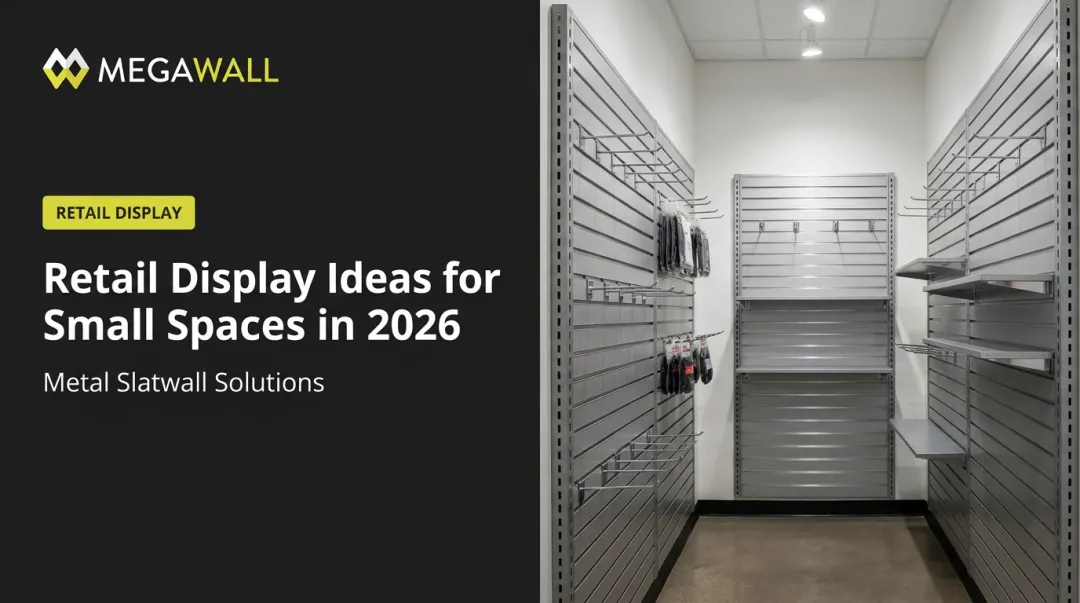
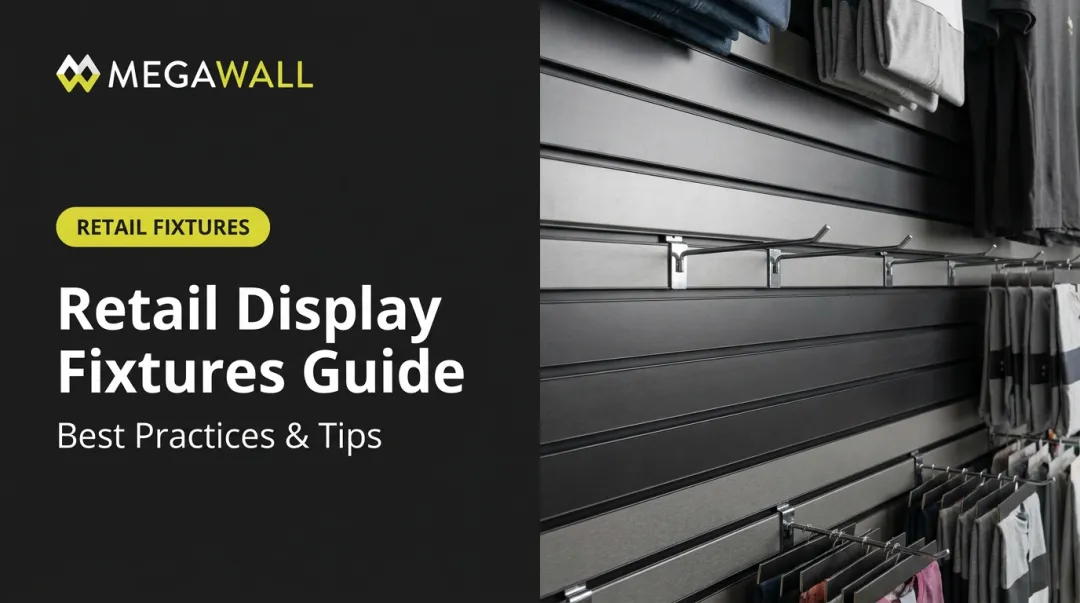
Slatwall systems are a practical example of this principle in action. Because slatwall panels accept a wide range of interchangeable accessories — hooks, shelves, brackets — retailers can reorganize their merchandising layout for:
- Seasonal product changes
- New product category introductions
- Promotional campaign resets
- Department or zone reconfiguration
The base panel investment spans multiple campaigns and categories. Megawall's steel slatwall is specifically designed around the tagline "display your products season after season" — the engineering reflects an intent for multi-year, multi-use deployment rather than single-campaign disposal.
Flat-Pack and Lightweight Shipping
Displays that ship unassembled and flat allow more units per truckload. Across a retail rollout covering hundreds of locations, consolidating shipments cuts fuel consumption and freight costs meaningfully. IKEA's flat-pack approach contributed to a 9% year-on-year reduction in transport-related climate emissions — demonstrating what dense, stackable packaging can achieve at volume. The same logic applies directly to display programs.
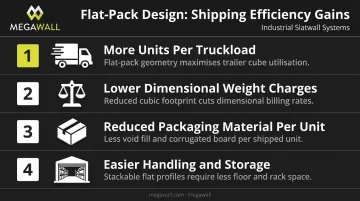
Key shipping efficiency gains from flat-pack design include:
- More units per truckload, reducing total freight trips
- Lower dimensional weight charges from carriers
- Reduced packaging material per unit
- Easier handling and storage at the receiving location
Durability and ROI: The Business Case for Sustainable Retail Displays
Total Cost of Ownership vs. Sticker Price
The upfront cost of a permanent metal display is higher than a corrugated temporary alternative. The more useful comparison is cost per year of actual use.
A display replaced annually generates not just the purchase cost, but manufacturing emissions, shipping costs, installation labor, and disposal fees — year after year.
A durable metal fixture that spans multiple campaign cycles amortizes all of those costs across its full service life.
USGBC data on LEED-certified retail spaces shows that sustainable retail environments can deliver life-cycle savings equal to 20% of total construction costs — evidence that sustainability investment pays back over time, not just immediately.
Megawall's Durability Credentials
Megawall's steel and aluminum slatwall systems hold over 50 lbs per linear foot — a consistent specification across both material lines and across various slat spacing configurations. That load capacity matters for sustainability: a display that can handle real retail loads without sagging, cracking, or delaminating is a display that doesn't need replacing.
Those savings extend beyond the fixture itself:
- Cleans easily and resists moisture and impact damage, extending operational life without refinishing or repair
- Accepts swappable accessories for seasonal resets without replacing the structural panel
- Fewer replacement cycles mean lower disposal costs and less material heading to landfill
Brand Equity and Shopper Alignment
Retailers that invest in certified, durable, sustainable display infrastructure signal environmental accountability in a visible, credible way. Research published in the Journal of Retailing and Consumer Services found that in-store green information quality affects consumer engagement behaviors through store credibility.
How to Choose an Eco-Friendly Retail Display Supplier
Not all sustainability claims from display manufacturers are equal. Use these criteria to evaluate a supplier's actual credentials:
Certifications to ask about:
- LEED certification (product-level or facility-level — ask for specifics)
- ISO 14001 environmental management system
- FSC Chain of Custody (relevant for any wood-based components)
- POPAI Sustainability Standard compliance
Questions to ask:
- What percentage of recycled content do your materials contain — and is this post-consumer, post-industrial, or a mix?
- Can you provide lifecycle or environmental data for your products?
- Which production stages are performed in-house versus outsourced?
The Value of Vertical Integration
A manufacturer that controls the full production process (from design and engineering through fabrication, finishing, and shipping) offers clear sustainability advantages. Fewer supply chain handoffs mean lower transportation emissions, more consistent quality control, and clearer accountability at every stage.
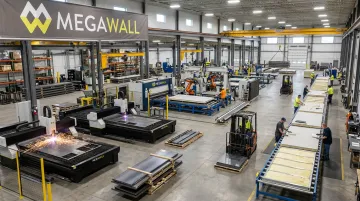
Megawall operates a 45,000 sq ft fabrication facility in Comstock Park, MI, handling design, engineering, laser cutting, metal forming, welding, machining, assembly, packaging, and shipping under one roof. That level of integration is itself a sustainability credential, reducing the transportation and handling that comes with outsourced production.
Long-term support matters just as much as the initial purchase. A sustainable display partnership means the supplier can provide replacement components, updated accessories, or reconfiguration options years after initial installation. Ask potential suppliers about modular compatibility and their commitment to supporting legacy installations — not just fulfilling a one-time order.
Frequently Asked Questions
What makes a retail display truly eco-friendly?
A truly eco-friendly display combines durable, recyclable or recycled-content materials with modular design for long-term reuse and responsible end-of-life options. Longevity matters more than using the cheapest recyclable material — a display that lasts through many campaigns generates far less total waste than one replaced each season.
Are metal retail displays more sustainable than wood or MDF?
Metal — particularly aluminum and steel — is highly sustainable because it recycles indefinitely without quality loss and requires no chemical binders like formaldehyde. MDF typically ends in landfill at end of life, since cured resin binders make fiber recovery difficult.
What is LEED certification and why does it matter for retail displays?
LEED (Leadership in Energy and Environmental Design) is a recognized standard for environmental performance. Display systems made with LEED-certified materials — like Megawall's aluminum slatwall with over 50% recycled content — use verified sustainable practices that can also support retailers pursuing LEED-certified store environments.
Can eco-friendly retail displays be as durable as traditional options?
Recycled-content aluminum and steel are actually stronger than most conventional MDF fixtures, handling over 50 lbs per linear foot without warping or delaminating. Durability is a core component of sustainability — the longer a display lasts, the less material it consumes over its lifetime.
What is the ROI of investing in permanent, sustainable retail display systems?
While upfront costs are higher, permanent displays pay back through lower replacement frequency, reduced disposal costs, easier graphic updates, and stronger alignment with eco-conscious shoppers.
How does modular slatwall design contribute to sustainability?
Slatwall systems allow retailers to swap accessories and reconfigure layouts seasonally without replacing the base structure. A single fixture investment spans many campaigns and product categories, cutting the material consumption that makes temporary display programs costly at scale.