This article breaks down what actually drives fabrication costs, how low bids hide their true price tags, and what to look for when comparing quotes so you can make a purchasing decision that holds up over time.
Key Takeaways
- Total cost of ownership matters more than the quoted price in metal fabrication
- Material grade, fabrication process, and finishing are the three biggest quality levers in any quote
- Low bids often exclude finishing, shipping, and QC costs that surface later as change orders
- Experienced, in-house fabricators cost more upfront but reduce rework, failure, and replacement risk
- Itemized quotes are the most reliable way to compare bids accurately
Why Price Alone Doesn't Tell the Full Story
A fabrication quote is a snapshot of what you'll pay at the point of purchase. It tells you nothing about what you'll spend six months or two years later.
The useful framework here is total cost of ownership (TCO): the full cost of a fabricated product across its service life, including installation, maintenance, repair, and eventual replacement. NIST's Life Cycle Cost Manual defines this as accounting for present and future costs of acquiring, owning, operating, maintaining, and disposing of a system — and it's the right lens for any metal fabrication purchase.
Where "Same" Quotes Actually Differ
Two quotes for the same job can look nearly identical on paper while differing completely in:
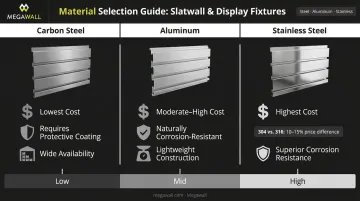
- Material grade — A36 mild steel vs. a higher-yield structural grade, or 304 vs. 316 stainless steel (which typically costs 10–15% more due to molybdenum content but offers noticeably better corrosion resistance)
- Fabrication method — laser cutting vs. plasma cutting, certified welding vs. unqualified welders
- Finishing process — powder coating included vs. raw metal shipped
- Quality controls — dimensional inspection and documentation vs. none
Direct price comparison without digging into these variables is how buyers get burned. And when those variables touch certifications or process compliance, the stakes go beyond quality — they create liability.
The Hidden Compliance Risk
Skipping certifications or process steps to lower cost doesn't just affect product quality — it creates liability. Welds that don't meet procedure specifications, materials without mill test reports, and finishes that fail fire code requirements all carry downstream consequences.
TWI research on manufacturing and fabrication welding found average repair rates of 1–3% across oil, gas, and power sectors, with peak rates reaching 25%. Quality failures compound fast — and so do the costs that follow them.
Regulatory and compliance failures triggered by corner-cutting fabrication can easily exceed whatever was saved on the original quote.
The Real Cost Drivers in Metal Fabrication
Understanding what moves a fabrication quote up or down is the foundation for evaluating bids intelligently.
Material Selection
Raw material is often the first place cost gets manipulated. Different metals carry different base prices, but their processing requirements vary just as much:
- Carbon steel — lowest base cost, widely available, requires coating for corrosion protection
- Aluminum — higher base cost, lighter, naturally corrosion-resistant, used extensively in display and architectural applications
- Stainless steel — highest base cost (316 runs 10–15% more than 304), specified where corrosion resistance or appearance is non-negotiable
Material substitution — swapping a specified grade for a cheaper alternative without disclosure — is a standard tactic low-cost fabricators use to protect their margins at your expense.
Design Complexity
Every added bend, tighter tolerance, and custom profile multiplies cost in three ways:
- Fabrication time
- Tooling requirements
- Scrap rate exposure
Well-engineered designs that minimize unnecessary complexity reduce cost without compromising function. This is why design and engineering capability in-house matters — a fabricator that can flag design inefficiencies before production saves money at the source.
Fabrication Process
The process a shop uses shapes both what they can make and what they'll charge — and not every shop has the right equipment for your job:
| Process | Advantage | Trade-off |
|---|---|---|
| Fiber laser cutting | High precision (~0.01" tolerance), clean edges | Higher equipment cost |
| Plasma cutting | Faster and lower cost on thick material (>5/8") | Wider kerf, less precise edge |
| MIG welding | High speed, good for structural work | Less precise than TIG |
| TIG welding | Precision, cleaner aesthetics | Slower, higher labor cost |
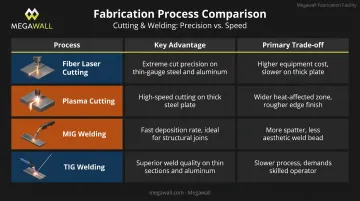
According to Hypertherm, plasma system initial investment runs 2–5x lower than fiber laser — which means a shop with only plasma cutting equipment may quote cheaper while being the wrong fit for precision applications.
Surface Finishing
Skimping on finish is where short-term savings become long-term costs. The American Galvanizers Association estimates corrosion maintenance can run 2–5 times the initial project cost over a product's lifetime. The right finish upfront — powder coating, anodizing, galvanizing — isn't a line item to negotiate away.
Production Volume
Setup, tooling, and programming costs are fixed — spread them across 500 units and the per-piece price drops significantly. A prototype run will always cost more per piece than a production order. When comparing quotes, confirm that volume assumptions are identical across all bids, or you're not making a real comparison.
How Low Bids Hide Their True Costs
Low bids typically reflect something missing from the scope — not a fabricator who found a smarter way to work.
Material Substitution
The most common mechanism: substituting a lower-grade or non-domestic material that technically claims to meet a specification but lacks consistent quality control. The result is parts that are weaker, dimensionally inconsistent, or prone to early failure — none of which is visible at delivery.
That's where mill test reports (MTRs) matter. Without them — documents that verify physical and chemical properties like yield strength and material grade — there's no accountability for what material actually went into your order. The Fabricator notes that MTRs provide traceability and confirm compliance with applicable standards. A fabricator who can't provide them on request is a risk.
Cutting Corners in the Manufacturing Process
Low bids often reflect skipped steps invisible at delivery:
- Unqualified welders without documented Welding Procedure Specifications (WPS)
- Bypassed or skipped inspection protocols
- Non-standard tolerances that pass visual check but fail in application
- Rushed processes that don't meet industry standards
These shortcuts show up later as field failures, returns, or safety issues — at the buyer's expense.
The "Bare Bones" Bid Strategy
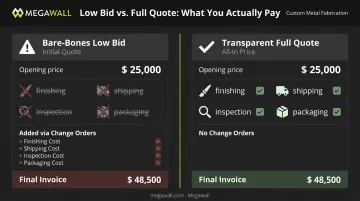
Some fabricators keep initial quotes deliberately low by excluding finishing, shipping, inspection, or packaging costs — then add them back as change orders once the project is underway. The final invoice often matches or exceeds what a more transparent competitor quoted at the start.
A detailed, itemized bid that breaks out materials, processes, finishing, and delivery is a sign that a fabricator has actually planned the project. If the quote is vague, budget for surprises.
What Quality Metal Fabrication Actually Looks Like
Quality fabrication isn't defined by price — it's defined by what's behind the price.
Indicators of a Capable Operation
Look for:
- Experienced, stable workforce — low turnover and long average tenure signal institutional knowledge that directly affects consistency and quality
- In-house design and engineering — the ability to review and optimize designs before fabrication reduces error and cost
- Complete capabilities under one roof — outsourcing critical steps like welding or finishing introduces quality control gaps and coordination risk
- A track record with known customers — demonstrated performance for major brands is the most credible proof of capability
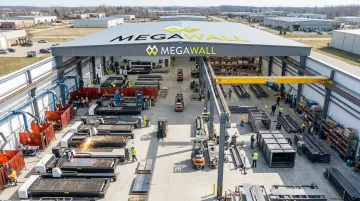
Megawall, for example, has built its fabrication model on exactly these principles. With 21 years of experience and 25+ employees averaging 12.5 years of tenure, the operation runs from a 45,000 sq ft facility in Comstock Park, MI. Complete in-house capabilities — laser cutting, press brakes, roll forming, MIG/TIG/spot welding, machining, and assembly — mean every step from design through shipping stays under one roof and one quality standard.
Quality Control in Practice
Real quality control costs money and shows up in bids from honest fabricators:
- Consistent machine maintenance to hold dimensional tolerances
- Material traceability through mill test reports
- Documented welding procedures (WPS/PQR) where structural integrity is required
- Dimensional inspection before parts ship
When a fabricator skips these steps to sharpen a quote, it typically shows up later — in rejected parts, rework costs, or field failures. Ask for them upfront.
The Long-Term Value of Investing in Quality Fabrication
Durability as a Financial Argument
A higher-quality fabricated product that lasts longer and requires less maintenance delivers better ROI than a cheaper product that needs early repair or replacement. The math is straightforward once you account for the full service life.
For structural coating alone, the AGA estimates corrosion maintenance over a product's lifecycle can run 2–5x the initial project cost. Getting the finish specification right upfront avoids compounding maintenance costs down the line.
In retail specifically, fixture durability has a direct revenue dimension. POPAI research shows 76% of purchase decisions are made in-store — meaning the quality of your display environment influences most buying decisions. A poorly fabricated fixture degrades that environment in ways that never appear on a replacement invoice.
Megawall's steel and aluminum slatwall systems are built to hold up to that standard:
- Steel slatwall: Guaranteed against warping, breaking, or delamination season after season
- Aluminum slatwall: Made from 50%+ recycled content, LEED-certified, and rated for the same load performance as steel — supporting retailers with ESG supply chain requirements
Sustainability and Compliance Value
LEED-certified materials, recycled content documentation, and fire code compliance add long-term value by:
- Reducing regulatory risk
- Supporting corporate sustainability goals
- Meeting retailer requirements for sustainable supply chains
These credentials aren't free — but they protect against compliance exposure and support positioning in retail environments where sustainability credentials matter.
How to Evaluate and Compare Metal Fabrication Bids the Right Way
Request Fully Itemized Quotes
Ask for quotes that separately break out:
- Material costs (with grade specified)
- Labor
- Finishing and coating
- Shipping and packaging
- Any setup or tooling fees
This lets you compare like-for-like and identify exactly where a competitor is cutting cost.
Questions to Ask Any Fabricator
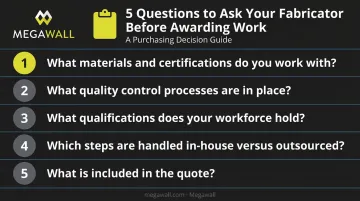
Before awarding work, get answers to these:
- What materials will you use, and can you provide certifications or mill test reports?
- What are your quality control processes — inspection, documentation, traceability?
- Who performs the fabrication, and what are their qualifications?
- Are all fabrication steps completed in-house, or are any processes outsourced?
- What exactly is included in this quoted price?
What Transparency Looks Like
The best indicator of quality is a fabricator's willingness to answer these questions in detail, show their capabilities, and stand behind their work with a clear track record. A fabricator who can't or won't answer them has something to hide in the quote itself.
The lowest bidder who deflects these questions is a financial risk. A higher initial quote paired with full transparency is the better economic choice when you account for rework, delays, and material failures down the line.
Frequently Asked Questions
How do you estimate fabrication cost?
Fabrication cost is built from material costs, direct labor, and overhead (fixed overhead typically accounts for 8–12% of total revenue), plus finishing, shipping, and any one-time tooling or setup fees. Always request a full itemized breakdown rather than evaluating a single total number.
How much do metal fabricators charge per hour?
Shop rates vary widely based on location, equipment, and labor skill level, but a higher stated rate doesn't mean higher cost per part. A more automated shop may complete the same job faster and at lower total cost than a shop with a lower hourly rate. Request itemized quotes rather than comparing hourly rates in isolation.
Why does the cheapest bid often cost more in the end?
Low bids often hide real costs. Common causes include:
- Material substitutions that perform below specification
- Skipped manufacturing steps that cause field failures
- Bare-bones quotes that exclude finishing and shipping
These gaps surface before or after delivery and push the final cost past what a transparent fabricator quoted upfront.
What should I look for when comparing metal fabrication quotes?
Compare itemized breakdowns, not just totals. Key things to verify:
- Material sourcing and certifications
- All process steps included in the price
- Fabricator's in-house capabilities and track record
A detailed quote from an experienced operation is worth more than a low number with no backup.
How does production volume affect fabrication cost?
Per-unit cost decreases as volume increases because setup, tooling, and programming costs are spread across more parts. Prototype and small-run orders always carry higher per-piece costs than high-volume production, so per-piece comparisons only make sense when both quotes assume the same quantity.