Here's the thing — physical retail is far from dead. According to the U.S. Census Bureau, e-commerce accounted for just 16.9% of total U.S. retail sales in Q1 2026, meaning more than 83% of purchases still happen outside of online channels. A well-planned small-space display doesn't just compete with larger stores — it can outperform them by creating a more focused, curated experience that feels intentional rather than overwhelming.
This guide covers practical display strategies built for 2026: vertical wall systems, layout principles, modular fixtures, lighting, and the trends reshaping how small retailers merchandise their spaces. Every idea here is chosen because it works within tight square footage — not despite it.
Key Takeaways
- Vertical wall systems are the single highest-ROI upgrade for small stores, multiplying merchandising surface without consuming floor space.
- Grouping products by occasion or lifestyle (not just category) reduces decision fatigue and encourages multi-item purchases.
- Strategic lighting and mirrors create the perception of depth, making compact spaces feel premium and open.
- Modular, reconfigurable fixtures outperform fixed single-purpose displays as a long-term investment.
- 2026 trends like sustainable materials, digital shelf labels, and sensory merchandising are reshaping how small stores compete with e-commerce.
What Makes a Good Retail Display in a Small Space
Effective small-space merchandising balances three things simultaneously: product visibility, ease of navigation, and brand storytelling. The constraint of limited space is actually an asset — it forces discipline. Every element must earn its place.
Visual Hierarchy Does the Heavy Lifting
The best displays guide a customer's eye without them realizing it. A strong visual hierarchy works like this:
- Eye level — hero products, bestsellers, or new arrivals
- Mid-level — complementary or supporting SKUs
- Lower level — budget options, bulk items, or replenishment stock
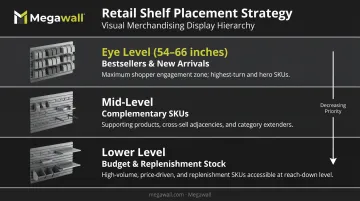
Height, color contrast, and deliberate spacing are the tools. Together, they move customers through a display logically rather than leaving them to scan randomly.
Curation Over Density
Visual hierarchy tells customers where to look — but how much you show them matters just as much. Research published in the Journal of Business Research found that shoppers in goods-retail settings preferred medium product density over either extreme — too sparse or too packed both hurt the experience. This matters for small stores, where the temptation to fill every inch of shelf is strong.
The practical takeaway: a curated, readable display outperforms a stuffed one. Shoppers should be able to take in a section at a glance. Give products room to breathe, and customers are more likely to stop, engage, and buy.
10 Retail Display Ideas for Small Spaces in 2026
Go Vertical with Your Walls
Floor space is finite. Most retailers leave wall space almost entirely untapped.
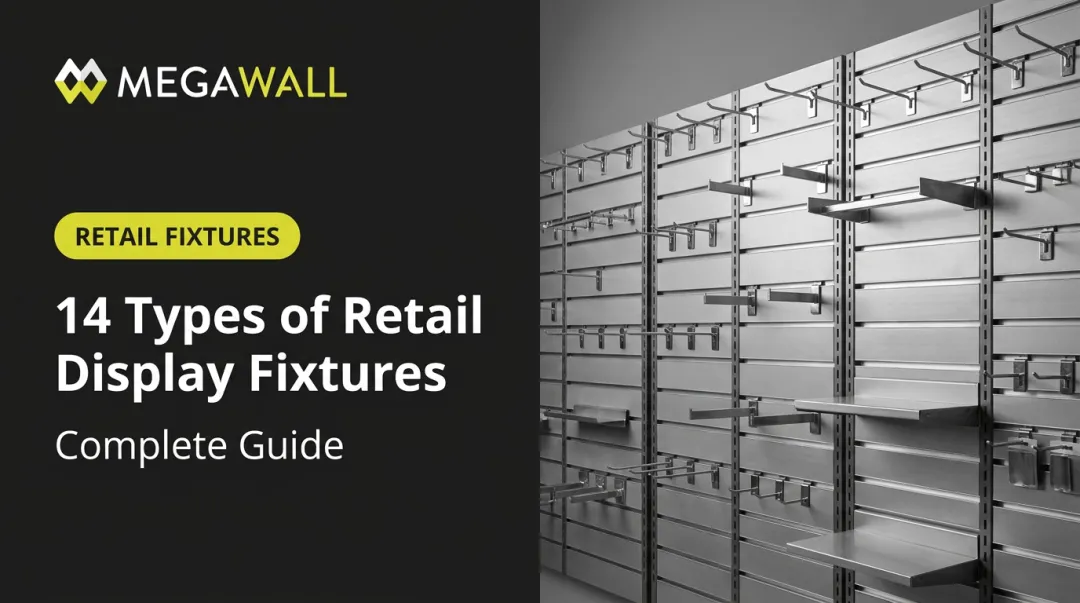
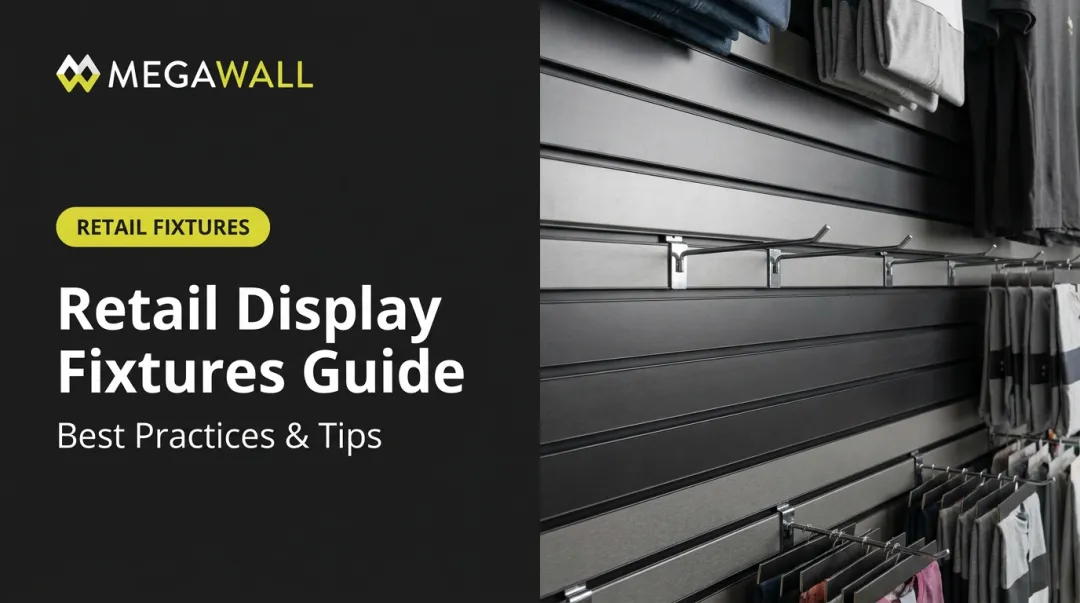
Wall-mounted shelving, slatwall panels, pegboards, and hanging racks can expand a store's merchandising capacity without expanding the footprint. The principle is simple: treat every wall from floor to ceiling as a display surface, not a backdrop.
For best results:
- Place bestsellers and premium items at eye level (roughly 54–66 inches from the floor)
- Descend logically to budget or bulk items lower on the wall
- Use the top sections for brand signage, seasonal headers, or aspirational imagery
The quality of the wall system matters here. A commercial-grade slatwall panel (particularly aluminum or steel) accepts hooks, shelves, bins, and brackets at any point along the panel, making reconfiguration fast and tool-free. Cheaper MDF alternatives warp over time and struggle with heavier loads.
Use Strategic Lighting to Create Depth and Focus
Lighting is one of the most underestimated tools in small-store design. Research published in the Journal of Environmental Psychology found that color and lighting conditions directly affect how shoppers perceive a retail space's identity, which in turn shapes whether customers feel comfortable browsing.
A layered approach works best:
- Ambient overhead light provides baseline visibility across the entire floor
- Accent/spotlights directed at hero products, display zones, or featured collections
- Warm accent light used to define premium sections, nooks, or focal displays
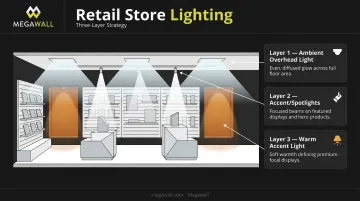
Good lighting creates the illusion of depth in a compact space. A well-lit display at the back of a small store pulls customers further in, which extends dwell time naturally.
Group Products by Story or Theme
Sorting merchandise strictly by category is logical, but it's not always how customers shop. Occasion- or lifestyle-based groupings: "Weekend Essentials," "Gifts Under $50," "New Season Picks". These reduce decision fatigue and create a more compelling browsing experience.
Foundational retail research by Dreze, Hoch, and Purk supports cross-category merchandising for driving multi-item purchases. In a small store, one well-curated themed shelf can outperform three conventional category shelves.
Practical examples:
- A kitchen store grouping olive oils, pasta, and a cookbook under "Date Night In"
- A sporting goods store pairing hydration products, trail snacks, and a map holder as "Day Hike Ready"
- A gift shop building a "New Baby" vignette from otherwise unrelated departments
Embrace Modular and Adjustable Fixtures
For small stores that rotate seasonal merchandise, fixed single-purpose fixtures create a recurring problem: every product change either requires a workaround or new capital spend. Modular display systems solve this.
Megawall's H-Frame, L-Frame, T-Frame, and Pinwheel floor fixtures are all wheel-mounted, meaning they can be repositioned across the sales floor without tools. Each accepts interchangeable shelves, brackets, and peg hooks — so the same fixture that holds holiday gift sets in December can be reconfigured for spring clearance in March.
Why modularity matters for small stores:
- Seasonal resets don't require new capital investment
- Floor layout can shift as inventory mix changes
- Fixtures adapt to new product categories without replacement
Use Mirrors and Reflective Surfaces
A strategically placed large mirror does two things in a small retail space: it visually doubles the perceived depth of the room, and in apparel or accessories contexts, it invites customers to interact with products directly.
One oversized mirror positioned opposite a key display zone, particularly a well-lit slatwall section, is more effective than several small decorative mirrors scattered around the store. The goal is perceived spaciousness, not decoration.
Reflective metallic display surfaces also contribute without consuming dedicated space. A few practical placements worth considering:
- Opposite a primary slatwall section to visually extend the wall
- At the rear of the store to draw customers deeper in
- Adjacent to fitting areas or product demo zones to encourage interaction
- Brushed aluminum panels as display backing to add depth without a standalone mirror
Apply the "Less Is More" Rule
Negative space, intentional gaps between products, signals quality. Sparse displays can create ambiguity about value on their own, but paired with strong quality cues (premium fixtures, good lighting, clear signage), open displays consistently read as higher-end than crowded ones.
A practical editing rule: if adding one new product to a display requires removing one existing product to maintain breathing room, make the swap. The display stays intentional, and neither the customer nor the merchandise suffers.
Why Wall Display Systems Are a Game-Changer for Small Retail
Why Wall Display Systems Are the Highest-ROI Upgrade for Small Retail
For small retailers, the wall is the most valuable and most underused real estate in the store. Converting flat walls into full-height, fully merchandised display surfaces is the single highest-impact change most compact stores can make.
Steel vs. Aluminum vs. MDF: What to Choose
Not all slatwall systems perform equally in commercial retail environments. Here's how the main material options compare:
| Material | Load Capacity | Durability | Best For |
|---|---|---|---|
| Steel slatwall | 50+ lbs per linear foot | No warping, delamination, or breakage | Heavy merchandise, hardware, sporting goods |
| Aluminum slatwall | 50+ lbs per linear foot | LEED-certified, 50%+ recycled content, easy to clean | Sustainability-focused retailers, frequent layout changes |
| MDF slatwall | Lower capacity | Susceptible to warping, moisture damage | Lower-budget installations; not recommended for commercial use |
| Pegboard | Limited | Prone to hole deformation over time | Light-duty, temporary, or very low-budget applications |
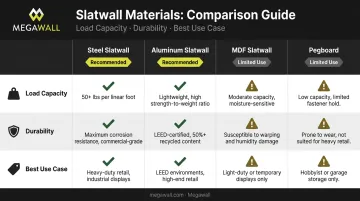
Megawall manufactures both aluminum and steel slatwall systems, with both rated above 50 lbs per linear foot — meaning they can support everything from lightweight seasonal accessories to heavier general merchandise without fixture failure.
The Concealed Fastener Difference
Once you've selected your material, how the panels mount to the wall matters just as much as what they're made of.
Standard visible-screw slatwall installations leave hardware exposed across the panel face. In a small store, where every visual detail is amplified, that hardware competes with the merchandise for attention.
Megawall's hidden fastener system, patented since the company's founding in the late 1980s, creates a seamless, uninterrupted wall surface for sections up to 8 feet in length. The panels interlock without exposed screws, keeping the customer's eye on the products rather than the hardware behind them. That's the difference between a display wall that looks finished and one that looks assembled.
Slot Spacing and Accessory Flexibility
Aluminum slatwall systems from Megawall are available in five slot-spacing options: 1", 1-3/8", 1-1/2", 2", and 3" on center. Tighter spacing — particularly the 1" option — allows more accessory placement points along the wall, which matters when displaying small or varied products. Steel slatwall is available in a 3" on-center configuration.
All configurations accept standard slatwall accessories: hooks, shelves, bins, and brackets. This means a single wall system can serve multiple product categories across the store's lifespan.
Layout Principles That Make Small Stores Feel Bigger
Good layout turns a constrained space into a deliberate one.
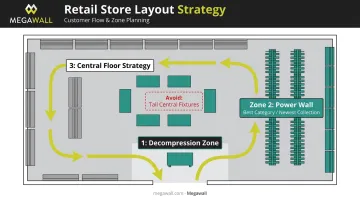
The decompression zone: The first few feet inside any store entrance should be open and uncluttered. Retail anthropologist Paco Underhill identified this transition area as critical — shoppers need a moment to mentally shift from outside to inside before they engage with merchandise. A single impactful display here works far better than a product wall.
The power wall: Most shoppers naturally move or look right upon entering a store. This makes the right-hand wall — what retail designers call the "power wall" — the highest-visibility real estate after the store window. The strongest product category, newest collection, or best-curated themed display should live here, mounted on a well-organized vertical wall system for maximum impact.
Floor fixture strategy:
- Avoid tall floor fixtures in the center of a small store — they block sight lines and make the space feel cramped
- Reserve central floor space for low-profile tables or minimal island displays
- Use perimeter walls and shelving systems to build height and merchandise density without eating into floor space
2026 Retail Display Trends for Small Stores
Sustainable and modular fixtures are moving from niche to standard. POPAI UK's 2024 VM & Display Show dedicated a full zone to sustainability practices in visual merchandising, reflecting growing industry pressure around display materials and packaging compliance. For small retailers, this trend aligns neatly with practical economics: durable, reconfigurable metal systems made from recycled content cost more upfront but outlast disposable alternatives by years.
Digital shelf integration no longer requires a large budget. According to the NRF, electronic shelf labels (ESLs) support accurate pricing, reduce waste, and build shopper trust — without consuming additional floor space. Small stores can get similar results with QR codes at a fraction of the cost. A placard next to a product can link shoppers to:
- Product videos and how-to demos
- Size guides and fit comparisons
- Customer reviews and ratings
That's e-commerce-level information depth, delivered directly from the shelf.
Experience-first merchandising is where small stores have a genuine edge over online competitors. Peer-reviewed research confirms that touching products increases consumer confidence in product evaluation, while the inability to touch triggers purchase hesitation. Sample stations, touchable swatches, scent elements, and demo units all deliver something e-commerce cannot. Even one well-executed sensory display drives both conversion and return visits.
Frequently Asked Questions
What makes a good retail display?
A strong display has three qualities: a clear focal point that anchors the eye, logical product flow that guides shoppers from hero items to supporting SKUs, and brand consistency in materials, color, and tone. When all three align, shoppers navigate and buy without needing staff guidance.
How do you display merchandise in a small space?
Prioritize vertical wall systems over floor-heavy fixtures, and group products by occasion or lifestyle rather than category alone. Resist the urge to fill every shelf — intentional negative space makes the store feel larger and signals product quality.
What are the trends in retail displays for 2026?
The leading trends are sustainable and recycled-material fixtures, modular systems that support seasonal reconfiguration, digital integration through QR codes and electronic shelf labels, and experience-first displays that let shoppers touch, test, or sample products directly.
What type of wall display system works best for small retail stores?
Commercial-grade aluminum or steel slatwall outperforms MDF and pegboard for durability and load capacity. Key criteria: load rating per linear foot (look for 50+ lbs), accessory flexibility across slot spacings, and concealed fasteners that keep the wall surface clean and professional.
How often should I change my retail displays?
Refresh window and primary displays every 4–6 weeks, aligned with seasons, promotions, or new inventory arrivals. High-visibility interior spots benefit from rotation every 2–3 weeks — frequent updates signal to repeat shoppers that there's always something new to discover.
How do I make a small retail store look bigger?
Four techniques work reliably: maximize vertical wall space with tall display systems, position a large mirror opposite your key display zone, layer lighting to eliminate dark corners, and keep the entrance area open and uncluttered so shoppers can orient before moving deeper into the store.