Introduction
Walk into any well-merchandised store and you'll notice something: products sit at eye level, aisles move naturally, and the checkout zone is lined with things you didn't plan to buy. The fixtures creating that environment are doing more work than most retailers give them credit for.
Choose wrong and you end up with cluttered aisles, dead wall space, frustrated shoppers, and seasonal resets that take days instead of hours. Choose right and your store layout does much of the selling for you.
According to POPAI's 2014 Mass Merchant Shopper Engagement Study, 82% of mass merchant purchase decisions are made in-store — meaning the physical environment around your products shapes outcomes far more than most retailers realize.
This guide covers all 14 major types of retail display fixtures, what each one does best, and how to build a fixture mix that fits your specific store goals.
Key Takeaways
- Retail display fixtures — shelves, racks, panels, cases, and stands — hold merchandise and shape how customers move through your store.
- The 14 types span wall-mounted systems, freestanding floor fixtures, and specialized displays — each solving a distinct merchandising challenge.
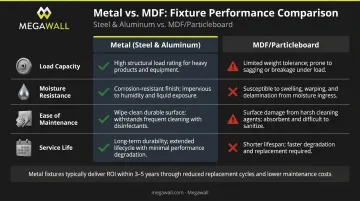
- Metal fixtures (steel and aluminum) outperform MDF on load capacity, longevity, and maintenance.
- Modular systems like slatwall and gondola shelving deliver the most value when your product mix rotates seasonally.
- Most successful stores mix fixture types strategically rather than relying on one solution.
What Are Retail Display Fixtures?
Retail display fixtures are the physical structures — shelves, racks, panels, cases, and stands — used to hold and present merchandise inside a retail store. They guide customers toward products and influence buying decisions.
Fixtures are distinct from props and signage. Props and signage are temporary visual elements tied to a promotion or season. Fixtures are semi-permanent or permanent structural systems — a longer-term capital investment in how your store operates.
That structural role means every fixture serves two purposes at once:
- Organizes and stores inventory at a browsable, accessible height
- Positions products where shoppers are most likely to notice and act on them
Why the Right Display Fixtures Matter
Poor fixture choices have real operational consequences. Overcrowded mid-aisle shelving buries products; fixed shelving in a seasonal environment forces costly resets. Undersized hooks in a hardware store fail under load, and a checkout counter that wastes countertop real estate misses one of the highest-converting spots in the store.
On the flip side, research from Oracle Retail and the University of South Carolina found that end cap displays can deliver a 32% average sales lift and 93% more product exposure — based on nearly 8 million transactions across 1,200+ grocery stores. That's the impact a single fixture placement decision can have on your bottom line.
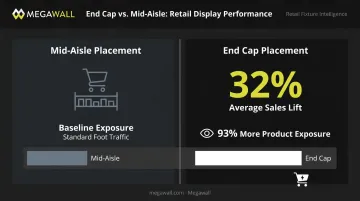
Revenue impact is only part of the picture. The right fixtures also cut labor costs through easier restocking, support faster seasonal changeovers, and capture vertical space that most retailers leave underutilized.
14 Types of Retail Display Fixtures
No single fixture type is universally superior. Each one solves a specific merchandising problem. Most stores that perform well use several types in combination.
Gondola Shelving Units
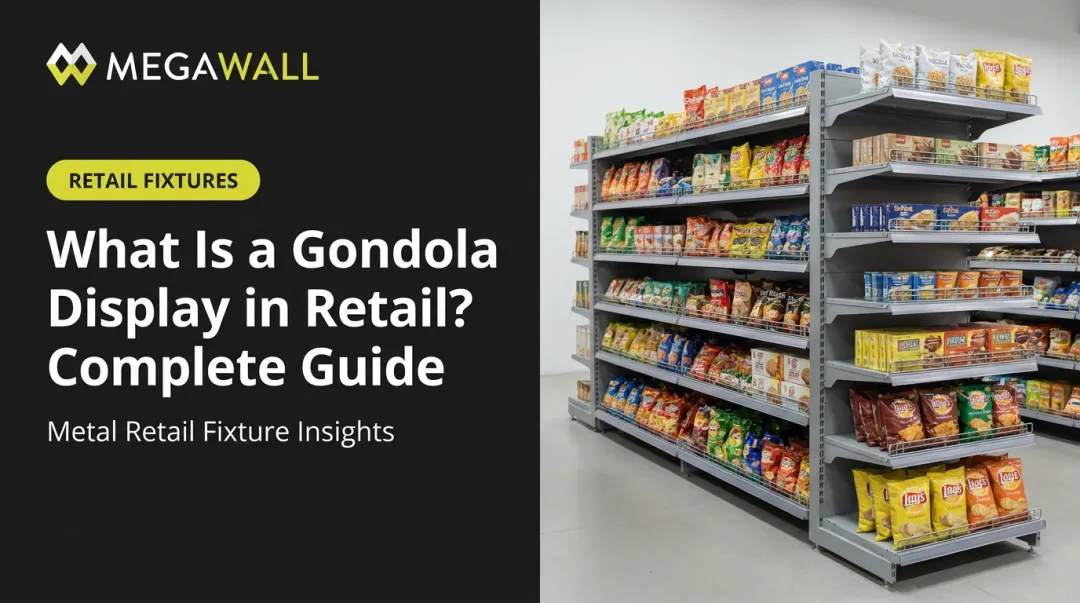
Gondola shelving consists of freestanding, double-sided units that can be configured with adjustable shelves, hooks, and pegboard or slatwall backing. They're the workhorse fixture in grocery, drug, and general merchandise stores.
Their modular design lets retailers build aisle runs and reconfigure layouts without permanent installation. Manufacturers like Lozier offer section widths from 24 to 48 inches and upright heights from 36 to 120 inches — enough range to fit virtually any store format.
Gondolas excel at maximizing product density at floor level and are easy to reposition for seasonal resets. They do require significant floor space and can create a warehouse feel if merchandise isn't thoughtfully organized.
For retailers with existing gondola units looking to upgrade the display surface without full replacement, Megawall's NuPanel Gondola Retrofit System offers a practical solution — 1-inch aluminum panels drop directly into standard 36- or 48-inch gondola uprights in minutes, replacing worn pegboard with metal slatwall that holds over 50 lbs per linear foot.
Display Cases
Display cases are enclosed glass or acrylic structures — typically lockable — used to showcase high-value, fragile, or theft-prone items like jewelry, electronics, and premium accessories. They simultaneously provide security and enhance perceived product value.
The security tradeoff is real, though. Numerator-reported research found 27% of shoppers switch retailers or abandon a purchase when products are locked up. Display cases work best in environments where staff can actively assist customers — jewelry stores, luxury boutiques, high-end electronics shops — rather than self-service retail formats.
Clothing Racks
Clothing racks are freestanding or wall-anchored bars designed to hang garments. Configurations include:
- Single-rail: Simple, high-density hanging for clearance or basic display
- Two-way and four-way: Show garments from multiple directions, ideal for featured collections
- Round racks: High capacity, typically used for promotional or value items
- Rolling racks: Mobile, useful for seasonal changeovers and back-of-house staging
Four-way racks maximize visibility from all angles and work well in the center of a sales floor. Rolling racks add operational flexibility without permanent floor commitment.
Mannequins
Mannequins — full-body, torso, headless, or abstract — show how clothing fits on a human form. This visual context helps customers project themselves into the product and make faster decisions.
A Journal of Business Research study found that humanized mannequin heads enhanced purchase intentions for displayed merchandise in physical store environments. Placed near entrances or in high-traffic zones, they can drive meaningful engagement with featured outfits. Full-body versions require significant floor space, which is the primary tradeoff.
Retail Shelving Units
Retail shelving units are horizontal surface-based fixtures — wall-mounted or freestanding — used to organize products at eye level or below. Adjustable shelf heights make them adaptable across categories from beauty to hardware to books.
Key considerations by type:
- Wall-mounted shelving: Preserves floor space in smaller stores; requires wall anchoring
- Freestanding shelving: Creates natural product focal points in high-traffic zones; more repositionable
Material choice matters significantly. Heavy-gauge steel shelving handles demanding load requirements that MDF or particleboard alternatives cannot. Megawall's high-performance shelves — formed and welded from heavy-gauge steel — are available in sizes up to 48" W x 24" D for heavy merchandise applications.
Slatwall Displays
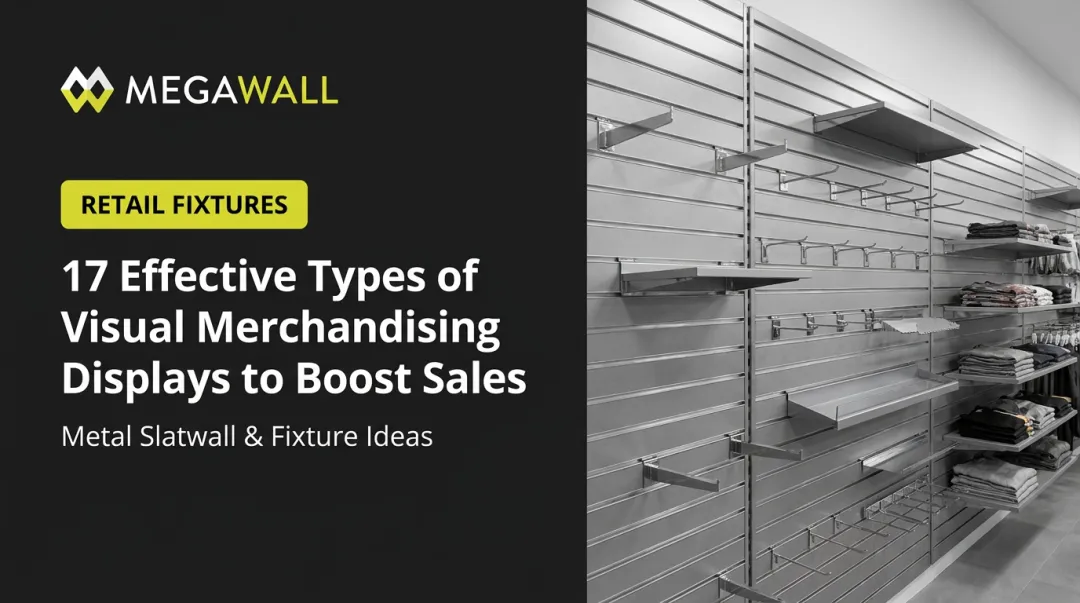
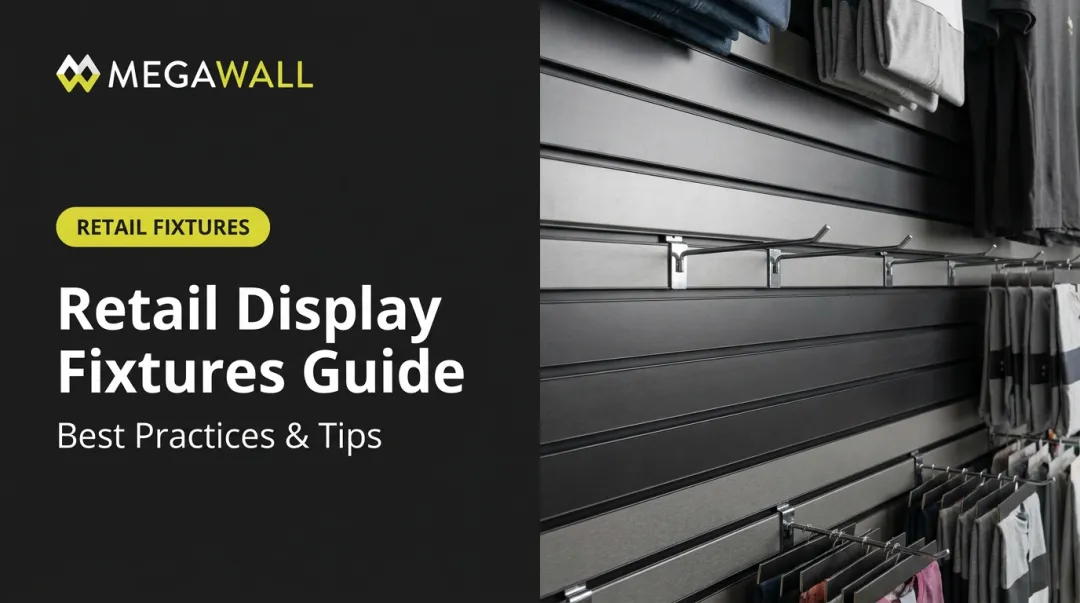
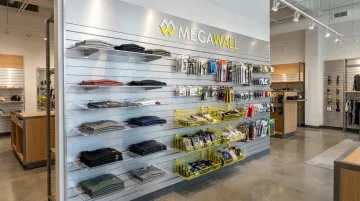
Slatwall panels feature horizontal grooves that accept interchangeable accessories — hooks, shelves, bins, faceouts, and hangrails — creating a single panel system that can merchandise virtually any product type without structural wall modifications.
The key differentiator is modular flexibility: displays can be reconfigured in minutes for seasonal changes or new product lines.
Material quality is a critical purchase decision. Traditional MDF slatwall can warp under heavy loads or in humid environments. Metal slatwall systems hold up considerably better. Megawall's steel and aluminum slatwall systems both hold over 50 lbs per linear foot, with hidden fasteners that create seamless sections up to 8 feet long.
The aluminum version is manufactured from over 50% recycled content and is LEED-certified — a strong option for retailers with sustainability goals.
Megawall offers aluminum spacing configurations from 1" to 3" on center, giving retailers the flexibility to display everything from small accessories to larger packaged goods on the same panel system. For retailers seeking a premium aesthetic, Megawall's V-Wall and WaveWall designer lines extend slatwall into higher-end visual presentations with floating shelf capability and contemporary surface profiles.
Retail Counters and Checkout Fixtures
Retail counters are the transaction and point-of-sale fixtures positioned near checkout. Well-designed counters do double duty: they facilitate payment processing while displaying impulse items — snacks, accessories, travel-size products — that capture last-minute purchases.
Countertop space is among the highest-converting real estate in any store. The counter's material and design (wood, metal, glass) should align with brand aesthetic, and integrated POS display systems can meaningfully increase add-on sales per transaction.
Pegboard Displays
Pegboard displays are perforated panel systems — wall-mounted or freestanding — that accept adjustable hooks, bins, and brackets. They're common in hardware stores, tool retailers, and accessory boutiques where SKU variety is high and product dimensions vary widely.
Pegboards excel at maximizing vertical wall space and allow easy hook repositioning when inventory changes. One limitation is aesthetic: pegboard's utilitarian look doesn't always fit premium brand environments. For stores seeking more visual polish with similar flexibility, slatwall panels are a natural upgrade.
Digital Display Fixtures
Digital display fixtures include screens, touchscreens, and interactive kiosks integrated into the store environment to deliver product information, promotions, interactive demos, or brand storytelling. The market behind them is significant — Grand View Research estimated the global digital signage market at $31.09 billion in 2025, projected to reach $58.42 billion by 2033.
They increase engagement for products that benefit from visual demonstration — skincare, tech, appliances — but carry higher upfront costs, require ongoing content management, and go stale fast if content isn't updated regularly.
Dump Bins
Dump bins are open-top, high-volume containers — typically placed near entrances or checkout — designed to hold large quantities of low-cost, high-velocity items in a loosely arranged format that encourages browsing.
They're effective at clearing inventory quickly and creating a sense of deal urgency. The "treasure hunt" format triggers impulse interaction that more organized displays don't replicate. Keep in mind: dump bins look disorganized when not regularly restocked, and they're entirely wrong for fragile or premium merchandise.
Towers and Floor-Standing Displays
Towers and floor-standing displays are tall, freestanding units — often with multiple shelves or hooks arranged vertically — designed to showcase a curated product range within a small floor footprint. Common applications include cosmetics, beverages, tech accessories, and seasonal items.
Their vertical profile maximizes floor space efficiency and creates prominent visibility in open-floor areas. In smaller stores, though, towers above shopper eye level can block visibility across the floor. Best used for promotional rotations and new product launches where prominent placement matters more than sightline neutrality.
Display Tables
Display tables are flat, waist-height surfaces — placed centrally or near store entrances — used to present folded apparel, shoes, home goods, or featured items in a browsable, touchable format.
They're effective anchors for seasonal or promotional collections and pair well with overhead signage. No vertical display space is the main constraint, and they clutter fast without a consistent replenishment routine. High-traffic tables need attention multiple times per day to stay presentable.
Wall-Mounted Fixtures
Wall-mounted fixtures are the broad category of shelves, hooks, bars, and panel systems that attach directly to store walls — freeing up floor space while converting perimeter walls into active merchandising zones.
They're especially valuable for smaller stores with limited floor area. The main limitation is repositioning flexibility — wall-mounted systems require anchoring and are harder to move than freestanding alternatives. Most stores benefit from a mix of both, using wall systems for perimeter merchandising and freestanding fixtures in the center floor.
End Cap Displays
End cap displays sit at the terminal ends of aisle gondola runs — high-visibility, high-traffic locations used to feature seasonal items, promotions, new arrivals, or top-selling SKUs.
The sales data is compelling. The Oracle/University of South Carolina research cited earlier reported a 32% average sales lift from outer-aisle end caps, with 93% more exposure versus mid-aisle placement. End caps outperform mid-aisle consistently because they're visible from multiple directions simultaneously.
Their effectiveness depends on frequent refreshing. A stale end cap — featuring last season's merchandise in week six — loses its impact entirely. Treating end caps as permanent product homes rather than rotating promotional vehicles is one of the most common mistakes in retail merchandising.
How to Choose the Right Retail Display Fixtures
Start with your product mix and customer behavior. What your products weigh, how shoppers interact with them, and how often your inventory rotates should drive fixture decisions — not catalog price tags.
Core Selection Factors
| Factor | What to Assess |
|---|---|
| Product type | Hanging vs. folded vs. bagged vs. boxed — each has an optimal fixture |
| Floor vs. wall space | Smaller stores should prioritize wall-mounted systems aggressively |
| Load requirements | Hardware and tools need rated metal fixtures; apparel needs are lighter |
| Budget horizon | Factor in 5-year replacement and maintenance, not just purchase price |
Material Selection
Metal fixtures — steel and aluminum — offer clear performance advantages over MDF:
- Higher load capacity without warping
- Easier to clean and maintain over time
- No moisture absorption near entrances or in high-humidity regions
- Longer service life that improves ROI over a 3-5 year horizon
For retailers pursuing LEED certification, aluminum systems with high recycled content are worth specifying. Megawall's aluminum slatwall is made from 50%+ recycled content and carries LEED certification — a practical option if your project has green building requirements.
The right material sets the foundation. The right fixture system determines how easily you can adapt when product lines or seasons change.
Planning for Flexibility
Stores with seasonal merchandise rotations or evolving product lines should prioritize modular systems:
- Slatwall panels with interchangeable accessories
- Adjustable gondola shelving with repositionable shelf heights
- Freestanding fixtures on casters for fast floor reconfigurations
Common Mistakes to Avoid When Selecting Retail Fixtures
Locking into a single fixture type wastes capacity — fixed shelving alone can't handle seasonal rotation, and floor-standing fixtures leave wall space earning nothing.
Choosing looks over load ratings leads to early failures. Undersized hooks, under-rated shelves, and MDF panels near high-humidity entrances or in climates with seasonal swings cause product damage and safety risks.
Ignoring total cost of ownership. Fixtures that warp within 18 months, resist cleaning, or can't accept updated accessories often cost more over five years than a higher-quality metal system purchased upfront — factor in lifespan and accessory compatibility before committing.
Treating end caps as permanent placements. End caps earn their sales lift from novelty and prominent placement — rotating them regularly is what sustains that performance.
Frequently Asked Questions
What is the most versatile retail display fixture?
Slatwall panels are the most versatile option available. A single panel accepts dozens of interchangeable accessories (hooks, shelves, bins, faceouts) and can be reconfigured without tools, making them adaptable across product types and store layouts.
What is the difference between slatwall and pegboard displays?
Both use panel-based systems with accessories, but slatwall features horizontal grooves that accept a wider range of compatible accessories and typically carries higher load ratings. Pegboard uses uniform hole patterns with more limited accessory options and presents a more utilitarian appearance.
Which retail display fixtures are best for small stores with limited floor space?
Wall-mounted fixtures — including slatwall panels, wall-mounted shelving, and pegboard — are the most space-efficient options because they convert vertical wall space into active merchandising area without consuming floor square footage.
How do I decide between freestanding and wall-mounted retail fixtures?
Freestanding fixtures offer more flexibility for repositioning and suit open-floor merchandising zones. Wall-mounted systems are more permanent, space-efficient, and appropriate for perimeter merchandising. Most stores benefit from using both in combination.
What are the most durable materials for retail display fixtures?
Steel and aluminum offer the highest load capacity, moisture resistance, and service life compared to MDF or wood-based fixtures. Aluminum produced with 50%+ recycled content — such as Megawall's LEED-certified slatwall systems — also qualifies for sustainability credits on LEED retail projects.
Can retail display fixtures support seasonal merchandise changes?
Modular systems like slatwall, gondola shelving, and adjustable clothing racks are specifically designed for easy reconfiguration. Accessories can be swapped, shelves repositioned, and layouts changed in hours — making seasonal resets efficient without significant new investment.