Introduction
Shoppers make purchase decisions fast. Research from a 2012 POPAI study found that 76% of purchase decisions are made in-store — meaning the physical display environment is doing most of the selling before a single conversation with staff happens.
The problem? Most retailers treat displays as interchangeable — swapping in whatever's available rather than choosing what actually fits the product, the layout, and the shopper. That mismatch quietly drains sales.
There are actually 17 distinct types of visual merchandising displays, each engineered for specific store layouts, product weights, traffic patterns, and shopper behaviors. Choosing the wrong one — even a high-quality one — leaves money on the table.
This guide breaks down all 17 types, explains where each performs best, and covers what to avoid when building your display strategy.
Key Takeaways
- 76% of purchase decisions happen in-store — the right display type directly determines whether browsers become buyers
- There are 17 distinct display types spanning wall-mounted, floor, counter, and experiential formats
- Display type — not just product — drives how shoppers perceive products and whether they buy
- Fixture selection should be driven by product weight, traffic patterns, and store format
- Durable, modular systems like steel slatwall outlast low-cost alternatives and pay back faster
What Are Visual Merchandising Displays?
Visual merchandising displays are the physical fixtures and systems retailers use to present products in ways that capture attention, guide traffic, and trigger purchase decisions. They're distinct from general store décor — every display serves a functional merchandising role.
Done right, a display does the selling before a staff member ever walks over. It communicates product value, surfaces promotions, and reinforces brand identity — without any human involvement. Display selection is one of the highest-leverage decisions a retailer makes, whether you're running a boutique or a big-box chain.
Why Visual Merchandising Displays Are Critical for Retail Sales
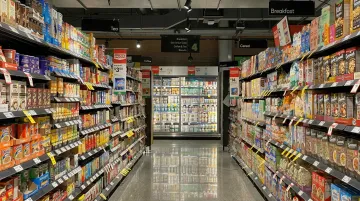
The 2010 Marketing Science Institute working paper found that 60–70% of supermarket purchases are unplanned. That means the right display in the right location doesn't reinforce a decision shoppers already made — it triggers one they hadn't considered yet.
Without an intentional display strategy, retailers run into predictable problems:
- Cluttered shelves reduce perceived product value
- Poor fixture height positioning causes shoppers to overlook products entirely
- No clear focal points shorten dwell time
- Mismatched fixtures send inconsistent brand signals
The display type itself matters as much as what's on it. A fixture that positions product at eye level, organizes items logically, and projects a clean visual aesthetic directly increases conversion likelihood. Poor fixture choices — misaligned heights, cluttered layouts, inconsistent aesthetics — reduce dwell time and send shoppers elsewhere, no matter how strong the product is.
17 Types of Visual Merchandising Displays
Displays are not one-size-fits-all. Different retail environments, product types, and shopper behaviors require different solutions. The 17 types below cover the full spectrum.
Wall-Mounted and Vertical Displays
Wall-mounted systems maximize floor plan efficiency by using vertical space for product density. They're especially valuable in stores with limited square footage.
Slatwall Displays
Slatwall is a wall panel system with horizontal grooves that accept interchangeable accessories — hooks, shelves, bins, and brackets — without tools. That modular flexibility makes it one of the most adaptable display formats available, able to accommodate seasonal resets or new product layouts quickly.
Pegboard Displays
Pegboard is a perforated panel system accepting hooks and accessories for hanging lightweight merchandise. It's a lower-cost vertical option best suited for small packaged goods — accessories, craft supplies, blister-packed items — in hardware, convenience, or craft retail. Hook design matters more than board strength for pegboard; most hooks are rated for 15–20 lb loads.
Grid Panel Displays
Wire grid panels — open-mesh metal systems — mount to walls or freestand, accepting hooks, shelves, and baskets. Their open structure provides high product visibility from multiple angles. Boutique fashion, gift shops, and accessory retailers use them specifically because shoppers can see product from multiple angles without rotating or lifting items.
Banner Stand Displays
Banner stands are graphic display systems using printed fabric or vinyl signage to communicate promotions, brand messaging, or product information. They don't hold product — they anchor display zones, direct traffic, or reinforce the visual story around a nearby fixture.
Floor and Freestanding Displays
Unlike wall-mounted systems, floor displays create standalone product zones that reposition as store layouts evolve — placed in high-traffic areas or aisle intersections where foot traffic is highest.
Gondola Shelving Displays
Gondola shelving is the standard double-sided (or single-sided) shelving unit found in grocery, pharmacy, hardware, and general merchandise retail. Gondolas create organized product categories and handle high SKU counts efficiently. Single-sided gondolas typically line perimeter walls; double-sided units fill center-floor aisles.
Freestanding Display Stands
Branded or unbranded standalone fixtures placed in high-traffic zones to promote new products, seasonal items, or featured lines. Often used by brands to create a dedicated product zone within a larger retail environment — a branded floor unit that draws attention outside of the standard shelf position.
Dump Bin Displays
Open-top freestanding containers holding a loose quantity of a single product — typically sale items, clearance merchandise, or grab-and-go goods. The loose, piled presentation signals value and urgency without any signage. You'll find them near checkouts and high-traffic floor areas in grocery and general merchandise stores.
Power Wall Displays
A power wall is a curated, high-impact wall display positioned at a key sightline — traditionally to the right of the store entrance — that showcases a retailer's most popular or brand-defining products. It functions as an anchor point that communicates brand identity and drives immediate attention to flagship merchandise.
Mannequin Displays
Life-size or partial-body forms used to show apparel, accessories, or lifestyle products in a styled, contextual setting. Mannequins help shoppers visualize how products are worn or combined, which increases cross-selling and average basket size. In fashion retail, a well-dressed mannequin near the entrance can pull shoppers toward full outfit purchases they hadn't planned on.
Point-of-Purchase and Counter Displays
Proximity to the transaction is the defining factor here. Whether at checkout, end of aisle, or a mid-store decision point, these displays catch shoppers when their purchase intent is already activated.
Endcap Displays
Endcaps occupy the end of gondola aisles — one of the most valuable positions in any store. Research published in the Journal of Retailing and Consumer Services found endcaps account for roughly 30% of total supermarket sales while representing just 2% of total store items, with rear endcaps delivering an average 416% sales uplift versus their standard shelf position.
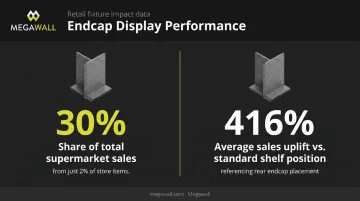
Retailers typically reserve endcaps for promotional items, seasonal products, new launches, or high-margin goods that benefit from the increased exposure.
POP and POS Displays
Point-of-purchase (POP) displays are located wherever purchase decisions are made — entry points, aisle intersections, mid-store. Point-of-sale (POS) displays are specifically at checkout. Both formats use small-format fixtures for grab-and-go products: snacks, travel-size items, batteries, seasonal novelties.
Countertop Displays
Compact fixtures designed to sit on service counters, cash wraps, or display tables. Used to showcase small, high-margin items or new launches at close range — common in beauty, jewelry, electronics accessories, and specialty retail where proximity to the transaction drives last-second additions.
Impulse Checkout Racks
Narrow, multi-level rack fixtures placed in checkout lane queues. Their lane-specific, multi-pocket format differentiates them from broader POS displays — they're specifically designed to capitalize on wait time with small, low-price-point products. For the square footage they occupy, checkout racks consistently punch above their weight in revenue per square foot.
Specialty and Experiential Displays
These formats go further than product organization — they create environments, tell brand stories, and pull shoppers in before they've even entered the store.
Window Displays
Exterior-facing visual setups using products, props, lighting, and signage to attract passersby and communicate current offers or brand identity. Window displays are the first visual touchpoint between a retailer and a potential customer. Research from the Journal of Retailing and Consumer Services confirms that storefront window displays directly influence shoppers' store-entry decisions and their perception of brand and store image.
Table and Pedestal Displays
Raised surface fixtures used to create curated product vignettes at mid-height — common in boutique, home goods, and luxury retail. At a comfortable browsing height, these fixtures invite shoppers to pick up, handle, and engage with products — which matters significantly in tactile categories like home goods and gifts.
Kiosk and Pop-Up Displays
Compact, self-contained structures that create a temporary or semi-permanent branded retail presence — within a larger store or in non-traditional locations such as malls or trade shows. Especially effective for product launches, brand activations, and seasonal campaigns where a full store footprint isn't justified.
Digital and Interactive Displays
Screen-based fixtures — digital signage, touchscreen kiosks, interactive product configurators — that extend product storytelling beyond what's physically stocked. 58% of shoppers notice in-store digital displays, with that figure rising to 79% among Gen Z shoppers. Digital displays are growing fast in electronics, automotive accessories, and specialty retail where product variation and configuration are part of the purchase decision.
How to Choose the Right Display Type for Your Store
The right display is determined by fit, not popularity. Match your fixture choice to these four factors:
| Factor | What to Evaluate |
|---|---|
| Product weight & dimensions | Determines structural requirements — heavy merchandise needs steel or reinforced systems |
| Available space | Wall vs. floor vs. counter placement options |
| Traffic patterns & sightlines | Where shoppers naturally look and move through your store |
| Update frequency | Seasonal resets require modular, reconfigurable systems |
Store type shapes the decision significantly:
- Hardware and sporting goods stores do best with heavy-duty wall systems like steel slatwall, built to hold bulky or weighted inventory
- Fashion and boutique retailers rely on mannequin displays, grid panels, and table vignettes to support lifestyle presentation
- Grocery and general merchandise stores use gondolas, endcaps, and dump bins to manage high SKU counts efficiently
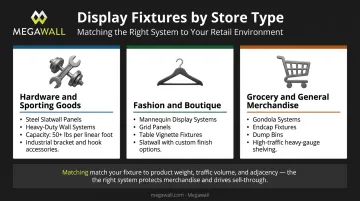
One consideration retailers often underestimate: long-term durability. A durable, modular fixture like steel slatwall delivers a stronger ROI over time than lower-cost MDF alternatives that warp, delaminate, and require frequent replacement. Megawall's steel systems are built from heavy-gauge steel with no risk of delamination, holding up to years of continuous retail use without degradation.
Common Mistakes to Avoid When Selecting Visual Merchandising Displays
Three mistakes account for most poor display decisions:
- Choosing for aesthetics over function. A display needs to hold, organize, and showcase your actual product. An impressive-looking fixture that can't support your merchandise weight or SKU density fails regardless of how it looks.
- Ignoring long-term maintenance costs. A display that's hard to clean, prone to damage, or can't be updated for seasonal changes will cost more over time than a durable, modular system. Powder-coated steel and anodized aluminum resist corrosion and hold their appearance year after year — MDF panels absorb moisture, chip, and degrade. That gap compounds across a multi-year store lifecycle.
- Misaligned placement. The wrong display type in the wrong location wastes the investment entirely. A fragile pedestal display in a high-traffic checkout zone is a liability. A premium endcap buried in a low-visibility aisle generates none of the exposure it was built for. Placement and fixture type must match the location's actual traffic and shopper behavior.
Conclusion
Visual merchandising displays are one of the most direct levers retailers have over in-store conversion. Each of the 17 types covered here serves a specific purpose — and understanding those distinctions is what separates a well-planned store from one that simply has product on shelves.
The best display strategy is built on fit. Match the right fixture type to the right product, location, and store environment, and a standard shelf becomes a genuine sales driver. That fit starts with the hardware — the slatwall panels, gondola systems, and specialty fixtures that determine what's physically possible in your space. Megawall manufactures metal slatwall and display systems used in major retail chains across North America, and can help you identify the right fixture configuration for your store layout and product mix.
Frequently Asked Questions
What is visual merchandising and retail display?
Visual merchandising is the practice of designing and arranging retail environments to showcase products attractively and drive purchase decisions. Retail displays are the physical fixtures and systems — shelving, wall panels, freestanding stands — used to execute that strategy in-store.
What are the 4 P's of visual merchandising?
The four P's are Product (what is displayed and how it's selected), Placement (where in the store it's positioned), Presentation (how it's styled and arranged), and Promotion (how signage and messaging communicate value or urgency alongside the display).
What is the 80/20 rule in visual merchandising?
The 80/20 rule holds that roughly 80% of sales come from 20% of products. Retailers should prioritize prime display real estate — eye level, endcaps, power walls — for top-performing or highest-margin SKUs instead of distributing display space evenly across all inventory.
What type of display is most effective for driving impulse purchases?
Endcap displays, POS/POP displays, and checkout rack fixtures are consistently the most effective for impulse purchases. They intercept shoppers at high-attention moments — aisle intersections and checkout queues — with small, low-cost items that need no extended deliberation.
How often should visual merchandising displays be updated?
Refresh displays every one to two months for general merchandise, with major resets aligned to seasonal transitions and new product launches. Left unchanged too long, displays become "invisible" — repeat shoppers simply stop registering them.
What is a slatwall display and where is it best used?
Slatwall is a wall panel system with horizontal grooves that accept interchangeable hooks, shelves, and accessories. Metal slatwall — steel systems can hold 50+ lbs per linear foot — is best suited for hardware stores, sporting goods retailers, and any environment that needs to display heavy or varied merchandise while maximizing wall space and enabling easy layout changes.